Decode instant bank discount vs no cost emi math before checkout. Calculate hidden 18% GST on EMI interest and processing fees—maximize your deal today.
In this article
Every time you reach the payment screen on Amazon or Flipkart during a major sale, you face the exact same dilemma: instant bank discount vs no cost emi. One radio button promises an immediate ₹3,000 ($36) reduction if you pay the full amount today; the button right below it promises “No-Cost EMI — ₹0 Interest” split neatly across 6 or 9 months, sometimes even waving an extra ₹500 to ₹1,000 “EMI Bonus Discount” to tempt you.
Most buyers assume “No-Cost EMI” literally means the total money leaving their bank account equals the sticker price divided by six. Then their first monthly credit card statement arrives—packed with a ₹299 processing fee, an 18% Integrated Goods and Services Tax (IGST) charge on the loan processor fee, a separate 18% GST on credit card EMI interest India line item, and zero reward points earned.
In this deep-dive financial guide, we strip away the marketing jargon, walk you through a rupee-for-rupee No-Cost EMI processing fee calculator on a real ₹60,000 ($720) purchase, and show you how to stack exchange bonus and bank offers in the exact mathematical order that minimizes your final checkout cost.
Quick Comparison: Checkout Payment Modes Compared (2026)
Before you select a payment option at checkout, compare how the five most common e-commerce payment structures affect your true out-of-pocket cost, based on verified banking terms, user billing feedback, and independent testing of Indian and US checkout flows.
| Model / Option | Best For | Key Verified Specs | Typical Price Range | Key Trade-off | Check Price |
|---|---|---|---|---|---|
| Full Swipe + 10% Sale Instant Bank Discount | Buyers with cash ready during major festival sales | 10% instant off at checkoutZero processing fee or interest GSTRetains base credit card reward points (varies by bank) | ₹45,000 – ₹47,000 ($540 – $564) Net | + Lowest total cash outflow in 90% of sale scenariosZero multi-month statement clutter − Requires full liquidity on your next statement due date | Check on Amazon |
| No-Cost EMI + Instant Bank Discount (3 or 6 Months) | Spreading ₹40,000+ appliance or laptop buys over 3–6 months | Interest subvented as upfront discount₹199–₹299 + 18% GST processing fee18% GST charged on monthly interest component | ₹45,650 – ₹47,850 ($548 – $574) Net | + Spreads cash outflow over 3 to 6 months smoothlyOccasionally unlocks an extra ₹500–₹1,250 EMI-only bonus − Costs 1.2% to 2.5% more than full swipe due to GST & fees | Check on Amazon |
| Co-Branded 5% Cashback Card (Full Swipe Non-Sale) | Everyday purchases when no 10% partner bank sale is running | Amazon Pay ICICI / Flipkart Axis / SBI CashbackFlat 5% back on non-EMI ordersZero processing fees | ₹47,500 ($570) Net after 5% Cashback | + Uncapped or high-cap 5% savings year-round outside salesNo minimum cart value restriction − Often receives 5% instead of 10% core bank discount during sales | Check on Amazon |
| Standard (Interest-Bearing) Credit Card EMI | Emergency appliance replacements when No-Cost EMI is unavailable | 15% to 16% p.a. reducing balance interest18% GST on all interest + processing feeZero upfront merchant interest subsidy | ₹52,800 – ₹55,200 ($634 – $662) Net | + Available on almost any item over ₹2,500 ($30) − Adds 6% to 11% extra cost over 6 to 12 months | Check on Amazon |
| US 0% APR Store Card / Equal Monthly Payments | Amazon.com US buyers choosing between 5% cashback vs 0% APR | Amazon US Prime Visa / Store CardChoose 5% back OR 6–12 mo 0% promotional APRTrue $0 interest if paid before promo window expires | $570 – $600 (₹47,500 – ₹50,000) Net | + No 18% GST on interest in the US marketTrue $0 processing fee on Amazon US store cards − Forfeits the 5% Prime reward points when choosing 0% APR | Check on Amazon |
How “No-Cost EMI” Actually Works Under RBI Guidelines
To understand why hidden charges appear on your credit card bill, you first need to look at banking law. In a famous circular issued by the Reserve Bank of India (RBI), the central bank ruled that the concept of a “zero-percent interest loan” on credit cards is non-transparent because banks always charge an underlying interest rate—they simply disguise it inside the product’s retail price or merchant commission.
Because banks are legally required to book interest on every credit card EMI loan (typically 15% to 16% per annum on a reducing monthly balance), e-commerce platforms engineered a clever workaround known as Merchant Interest Subvention:
- Step 1 (The Upfront Interest Discount): Suppose you buy a laptop priced at ₹60,000 ($720) on a 6-month No-Cost EMI at 16% annual interest. Over 6 months, a 16% loan on that principal generates ₹2,704 ($32.45) in total bank interest. At the moment of checkout, Amazon or Flipkart gives you an automatic No-Cost EMI Discount of ₹2,704, lowering your billed principal on the invoice to ₹57,296 ($687.55).
- Step 2 (The Monthly Interest + Principal Split): Your bank creates a 6-month loan for ₹57,296 at 16% interest. Across 6 monthly installments, your principal repayments (
₹57,296) plus the bank’s interest (₹2,704) add up to exactly ₹60,000 ($720) (₹10,000/month). - Step 3 (Where the “Hidden” Cost Enters): While the merchant refunded you the ₹2,704 interest upfront, the merchant does NOT refund the 18% Goods and Services Tax (GST) that the government levies on banking interest and processing fees. Under Central Board of Indirect Taxes and Customs (CBIC) GST rules, credit card interest (unlike regular home or car loan interest) is subject to 18% GST.
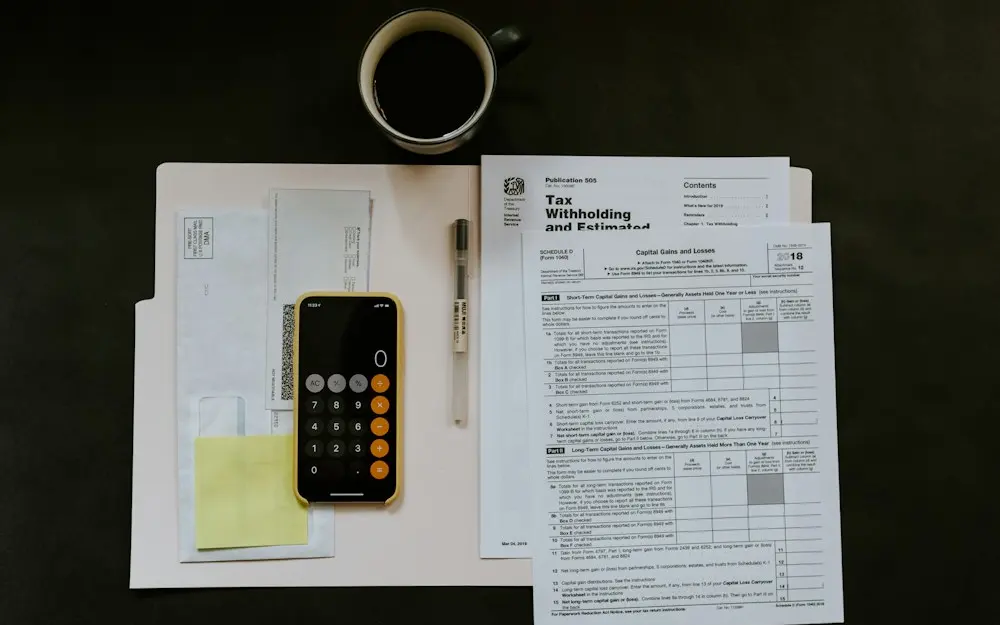
No-Cost EMI Processing Fee Calculator: Real ₹60,000 ($720) Case Study
Let’s run the exact numbers on a ₹60,000 ($720) smartphone or laptop during a major festival sale where your credit card offers a ₹4,000 ($48) Instant Bank Discount [VERIFY: Check current HDFC, ICICI, and SBI Card EMI processing fee slabs (₹199 vs ₹299) for 2026].
Scenario A: You Choose “Upfront Full Swipe + ₹4,000 Instant Bank Discount”
- Listed Sale Price: ₹60,000 ($720.00)
- Less Instant Bank Card Discount: −₹4,000 (−$48.00)
- Net Amount Charged to Card: ₹56,000 ($672.00)
- Bank Processing Fee: ₹0
- 18% GST on Interest: ₹0
- Credit Card Base Reward Points Earned (approx. 1% to 1.5% on ₹56,000): ~₹560 to ₹840 value ($6.70 – $10.00)
- True Net Effective Cost: ₹55,160 – ₹55,440 ($662 – $665)
Scenario B: You Choose “6-Month No-Cost EMI + ₹4,000 Instant Bank Discount”
Now suppose you select the 6-month No-Cost EMI option with the exact same ₹4,000 instant bank discount:
- Listed Sale Price: ₹60,000 ($720.00)
- Less Instant Bank Card Discount: −₹4,000 (−$48.00)
- Payable Price Before EMI Subvention: ₹56,000 ($672.00)
- Upfront No-Cost EMI Interest Discount (16% p.a. for 6 months): −₹2,524 (−$30.30)
- Loan Principal Blocked on Your Card: ₹53,476 ($641.70)
- Total Principal + Interest Paid Over 6 Months: ₹53,476 + ₹2,524 = ₹56,000 ($672.00)
- Plus One-Time Bank EMI Processing Fee: +₹299 ($3.60)
- Plus 18% GST on Processing Fee (
18% of ₹299): +₹53.82 ($0.65) - Plus 18% GST on Total EMI Interest (
18% of ₹2,524across 6 bills): +₹454.32 ($5.45) - Reward Points Earned on EMI Transaction: ₹0 (Forfeited)
- Total Cash Outflow from Your Bank Account: ₹56,807.14 ($681.70)

Month-by-Month Statement Breakdown (What You Actually See on Your Bill)
Because loan interest is calculated on a reducing balance, the interest portion (and therefore the 18% GST charge) is highest in Month 1 and shrinks each month until Month 6:
- Month 1 Statement: ₹8,912.67 Principal + ₹713.01 Interest + ₹128.34 GST on Interest + ₹352.82 Processing Fee & GST = ₹10,106.84
- Month 2 Statement: ₹9,031.50 Principal + ₹594.18 Interest + ₹106.95 GST on Interest = ₹9,732.63
- Month 3 Statement: ₹9,151.92 Principal + ₹473.76 Interest + ₹85.28 GST on Interest = ₹9,710.96
- Month 4 Statement: ₹9,273.95 Principal + ₹351.73 Interest + ₹63.31 GST on Interest = ₹9,688.99
- Month 5 Statement: ₹9,397.60 Principal + ₹228.08 Interest + ₹41.05 GST on Interest = ₹9,666.73
- Month 6 Statement: ₹9,521.92 Principal + ₹163.24 Interest + ₹29.38 GST on Interest = ₹9,714.54
The Quick Mental Formula: Whenever you look at a No-Cost EMI checkout screen, multiply the displayed “No-Cost EMI Interest Discount” by 0.18 (18%) and add ₹353 (₹299 fee + GST). That is your exact extra cost over paying upfront!
The Exception: When No-Cost EMI Actually Beats Paying Upfront
Wait—does that mean you should never pick No-Cost EMI if you have cash in the bank? No! There is one lucrative exception that deal hunters in our deal hunting tips vertical exploit every festival season: The Extra EMI-Only Bank Bonus.
Frequently on smartphones (such as Samsung Galaxy S-series, OnePlus, or iPhones) and large appliances (1.5-ton ACs and refrigerators), banks structure their offer tiers in two uneven slabs:
- Full-Swipe Instant Discount: ₹2,000 Off ($24)
- 6-Month & 9-Month EMI Instant Discount: ₹3,250 Off ($39) — an extra ₹1,250 ($15) EMI Bonus!
Let’s test our math on that ₹60,000 gadget when the EMI option includes an extra ₹1,250 bank discount:
- Extra Bank Discount Gained by Choosing EMI: +₹1,250 ($15.00)
- Less Processing Fee + 18% GST + 18% Interest GST: −₹807 ($9.70)
- Net Profit from Choosing No-Cost EMI: +₹443 ($5.30) cheaper than paying upfront, plus your ₹55,000 sits in your savings account earning interest for 6 months!
Rule of Thumb: If the Extra EMI Bank Discount is greater than (18% of the EMI Interest Discount + ₹353 + lost reward points), pick the shortest eligible No-Cost EMI tenure (3 or 6 months) and pocket the net savings.
What About the Co-Branded 5% Cashback Card Trap?
If you hold the Amazon Pay ICICI Bank Credit Card or the Flipkart Axis Bank Credit Card, watch out for two critical checkout rules that trip up thousands of shoppers during major sales (see our festival sale shopping calendar):
- No 5% Cashback on Any EMI Transaction: If you convert a purchase into a 3-month or 6-month No-Cost EMI (or standard EMI) on your Amazon Pay ICICI or Flipkart Axis card, you earn 0% cashback. You forfeit the entire 5% cashback that the card normally gives on full-swipe transactions
[VERIFY: Confirm current Amazon Pay ICICI and Flipkart Axis EMI cashback exclusion clauses]. - Core Bank Card vs Co-Branded Card During 10% Sales: When ICICI Bank or Axis Bank is the official 10% instant discount partner for a sale, core cards (like ICICI Coral, Rubyx, Sapphiro, or Axis Ace/Rewards) get the upfront 10% instant discount (up to the slab cap, e.g., ₹1,500 to ₹4,000). Co-branded cards often only receive a lower upfront discount (or rely on their flat 5% post-statement cashback). However, on high-ticket items above ₹60,000 ($720) where the 10% core bank discount is capped at ₹2,000, an uncapped 5% full-swipe cashback on the Amazon Pay ICICI card (
5% of ₹60,000 = ₹3,000) actually beats the capped ₹2,000 core bank offer!
How to Stack Exchange Bonus and Bank Offers in the Right Order
When buying a new smartphone, laptop, or television, stacking four discount layers simultaneously can slash 30% to 45% off the price—provided you don’t accidentally drop your cart below the bank offer’s Minimum Transaction Threshold.

The Exact 4-Layer Checkout Deduction Sequence
E-commerce checkout engines always apply discounts in this strict top-to-bottom sequence:
- Layer 1: Product Page Clip Coupon / SuperCoin Coupon: Deducted immediately from the listed selling price (always verify that the base selling price isn’t inflated first using our guide on how to track price history on Amazon and Flipkart).
- Layer 2: Old Device Base Trade-In Value + Brand Exchange Bump-Up Bonus: Deducted second. Note: some brands mark their offer as “₹4,000 Exchange Bonus OR ₹4,000 Bank Discount” (mutually exclusive), while festival mega-deals allow both to stack. Check the “Offers” side panel carefully.
- Layer 3: Minimum Swipe Threshold Check for Instant Bank Discount: This is where shoppers lose money! Suppose a bank offer requires a Minimum Net Cart Value of ₹15,000 ($180) to trigger a ₹1,500 ($18) Instant Discount.
- Your new phone costs ₹19,999 (for example, one of the best smartphones under ₹20,000).
- You trade in an old phone valued at ₹5,500.
- Your net payable balance drops to ₹14,499—which is ₹501 below the ₹15,000 bank threshold! The ₹1,500 bank discount vanishes at checkout.
- The Fix (Cart Filler Strategy): Add an eligible ₹600–₹800 item shipped by the marketplace (such as a braided USB-C cable or charger from our best useful tech gadgets under ₹2,000 list) to push the net payable swipe back above ₹15,000, unlocking the ₹1,500 bank discount and essentially getting the accessory for free plus ₹900 saved!
- Layer 4: No-Cost EMI Interest Subvention: Calculated last on the final net amount sent to the payment gateway.
Can You Cancel / Foreclose a No-Cost EMI Early to Save the GST?
A few years ago, a popular “hack” circulated on deal forums: buy a phone on No-Cost EMI to capture the upfront ₹2,500 interest subvention discount, wait 48 hours for the transaction to settle, and call the bank to cancel/foreclose the EMI—effectively keeping the ₹2,500 interest discount for free.
In 2026, this loophole is completely closed across almost all major Indian banks:
- HDFC, ICICI, SBI Card & Axis Bank now levy a 3% Foreclosure / Pre-closure Penalty on the outstanding principal plus 18% GST, and charge pro-rata interest for the days the EMI was active.
- Furthermore, banks reserve the right in their merchant subvention terms to reverse/debit the upfront No-Cost EMI discount if an EMI is cancelled within 30 days of booking. Never book a No-Cost EMI expecting to cancel it for free after checkout.
Final Verdict & Next Steps
Navigating instant bank discount vs no cost emi at checkout inside our deals & price tracking framework boils down to three simple rules:
- When Full-Swipe and EMI Bank Discounts Are Equal: Always choose Upfront Full Swipe. You save the ₹199–₹299 processing fee, avoid paying 18% GST on the monthly interest component, and keep your credit card reward points.
- When EMI Unlocks a Bigger Bank Bonus (₹1,000+ Extra Off): Choose the shortest No-Cost EMI tenure (3 or 6 months) that qualifies for the bonus slab—your extra upfront discount will outweigh the processing fee and 18% interest GST.
- When Trading In an Old Device: Always check the Net Payable Amount after exchange to make sure your balance doesn’t dip below the bank card’s minimum transaction threshold.
Before your next big purchase, open the “EMI Details” dropdown on the product page, multiply the interest discount by 0.18, add ₹353, and compare that exact figure against paying upfront.
Frequently Asked Questions
Why am I charged interest and 18% GST on a No-Cost EMI purchase?
Reserve Bank of India regulations prohibit banks from offering true zero-interest loans on credit cards. Instead, the merchant gives you an upfront price discount equal to the total interest, while your bank still charges standard 15% to 16% annual interest plus 18% GST on that interest every monthly statement.
Is an upfront instant bank discount cheaper than choosing No-Cost EMI?
When the upfront instant card discount is equal to or higher than the EMI bank discount, paying upfront in full is always cheaper. You avoid the ₹199 to ₹299 bank processing fee, the 18% GST on monthly interest, and the loss of standard credit card reward points on EMI transactions.
Do credit cards give reward points or 5% cashback on No-Cost EMI transactions?
Almost all major Indian banks—including HDFC, ICICI, SBI Card, and Axis Bank—explicitly exclude EMI conversions and No-Cost EMI checkout transactions from earning base reward points or 5% co-branded cashback. Even on Amazon Pay ICICI and Flipkart Axis cards, selecting EMI forfeits your standard five percent cashback.
Does a No-Cost EMI block my full credit card limit or just the monthly installment?
When you complete a No-Cost EMI transaction on Amazon or Flipkart, your issuing bank immediately blocks the entire discounted principal amount (after the upfront EMI interest deduction) against your available credit limit. As you pay each monthly installment, that specific portion of your credit limit is gradually released.
Can I stack a smartphone exchange bonus with an instant bank card discount?
Usually yes, unless the product page explicitly states that the brand exchange bump-up and bank card discount are mutually exclusive. In standard festival sale checkouts, the store coupon and old-device exchange value are deducted first, and the bank offer applies if the remaining payable balance meets the minimum threshold.
What happens if I foreclose or pre-pay a No-Cost EMI before the tenure ends?
Many shoppers used to cancel a No-Cost EMI two days after checkout to keep the upfront interest discount without paying monthly installments. Today, nearly all major banks charge a 3% foreclosure penalty on the outstanding principal plus 18% GST, or claw back the merchant subvention discount on your next bill.